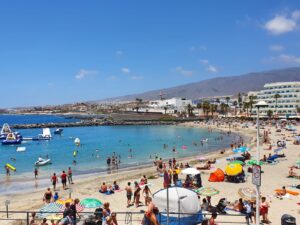
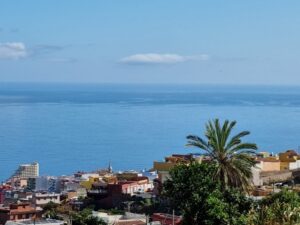
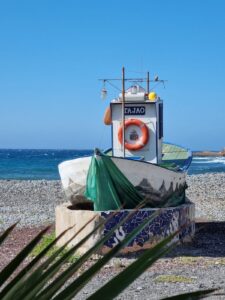
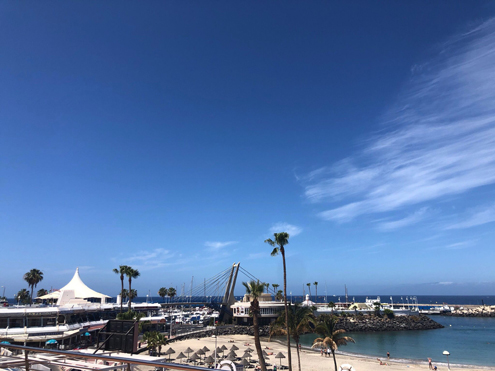
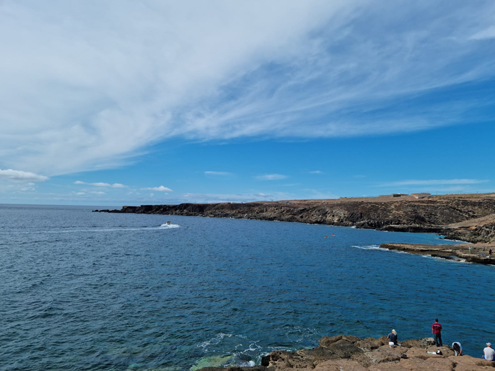
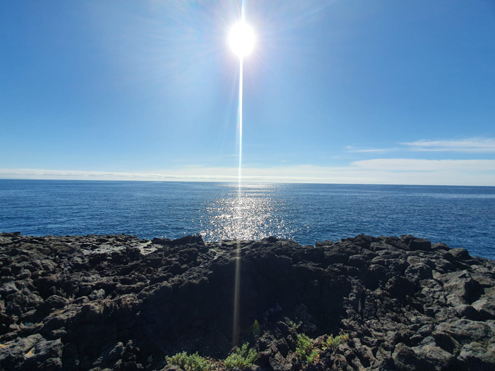
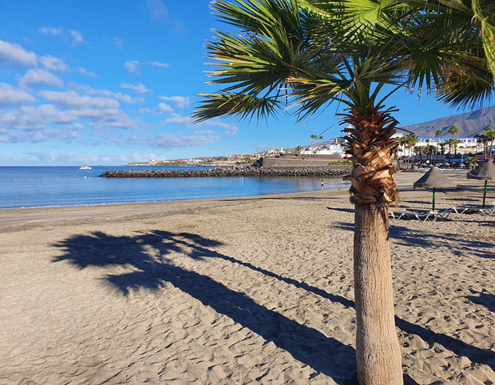
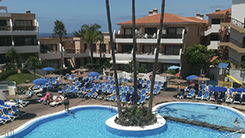
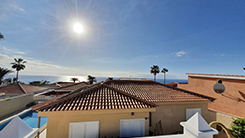
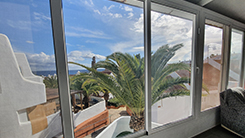
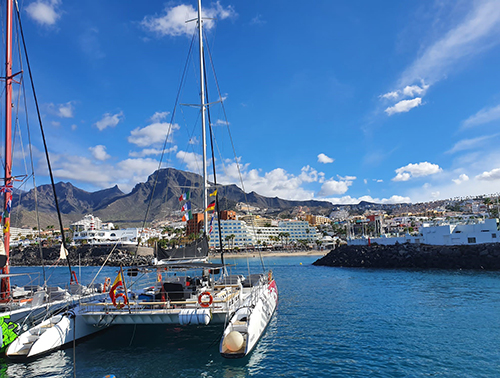
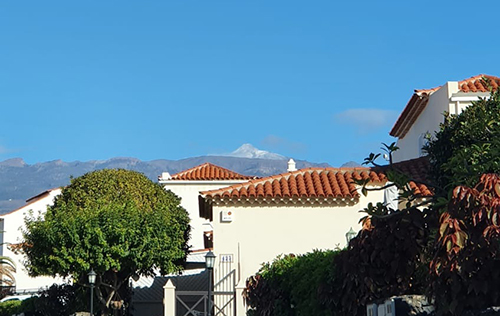
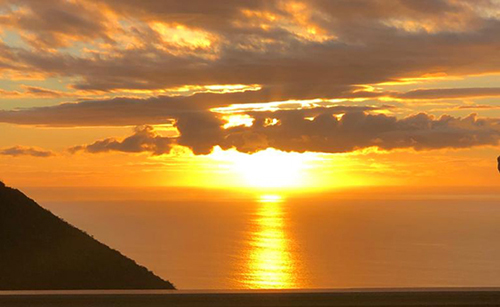
Tenerife is top in a poll of ‘Europe’s best islands’!
KAYAK, the travel search engine, collated data for 70 islands across the whole of Europe, classifying them under various headings: Weather, Accessibility by aeroplane, Prices, Hotels, Car hire, Restaurants, and general costs on location for Food and Transport, Things to do, Activities for children, Covid-safety measures, and Sustainability, including Environmental Care.
The question asked in every country and several autonomous regions on the continent of Europe was ‘If you had to choose your favourite island for a holiday or short break, which would it be?’
Europe’s favourite holiday island was revealed to be Tenerife!
Musement, a holiday organiser carried out similar research and asked residents in 44 countries which island in Europe they would most like to visit if they could go tomorrow and there was a clear winner.
Apart from being endorsed by its own nation, Tenerife was the top option for Belgium, Iceland, Germany, Belarus, Ireland, Latvia, Luxembourg, and even Scotland, which might have been expected to be the first to opt for an island of its own, given that it has so many, and the Outer and Inner Hebrides are hugely popular with tourists from mainland Scotland year-round.
It does not take a genius to work out why Tenerife might be the top option, as sunshine is guaranteed, with a comfortable climate all year round. Many residents in these countries would head to Tenerife purely for that reason – warm weather, with easy access to beaches and on-site swimming pools in typical tourist resorts. But there are plenty of countries in or on the edge of Europe that offer similar, so there is something else that keeps holidaymakers coming back.
Tenerife, being the largest island in the Canarian Archipelago and the favourite Spanish island among Europeans according to Musement, is because you can be sure you will find fabulous attractions beyond its beaches, surfing-sailing-snorkelling-scuba-diving schools, swimming pools, pavement cafés and bars.
Often discovered by accident by sun-seeking tourists – excursions offered by their tour operators, taken up because they are ‘strongly recommended’ usually reveal something surprising and inspiring a feeling of wonder or delight. They get talked about, photographed, and shown on social media, and enjoyed so much that those who take part want to tell everyone, show friends and family who join them next time, or visit again.
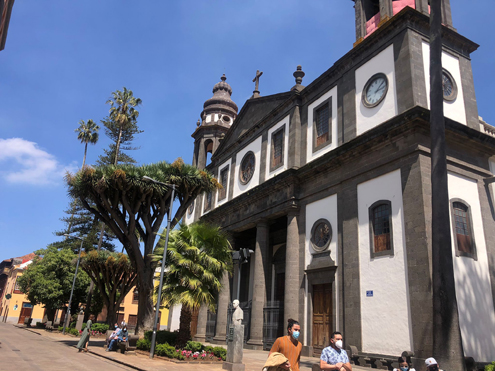
Given that Tenerife could easily be the subject of at least one, if not several, articles of its own, you might like to have a look at some of its most jaw-dropping sites: Masca, the ‘Machu Picchu of Spain’, the Colonial town of San Cristóbal de la Laguna and the nearby mountainous Anaga Rural Park, the Drago de Icod – a Drago tree, native to Macronesia, being several thousand years old – or go whale-spotting off the coast of Adeje, descend into the volcanic Los Vientos caves, admire the stately northern-European-style wood-beamed houses in the heart of La Orotava and its ornate Casa de los Balcones (House of Balconies), and of course, visit Teide National Park.
The Teide National Park is a huge volcanic landscape, including the highest peak in Spain and second highest in the whole of Europe, with intriguing-looking rock-towers and desert plants, where you can walk right into the crater of an active volcano. Active, but with no eruptions for centuries and none likely in the lifetimes of anyone alive today.
It is no wonder that our beautiful island has been voted as ‘The Best Island in Europe.’
Welcome to the latest edition of the Tenerife Property Shop newsletter.
Here in Tenerife, Spring has most definitely sprung; with sunny, warm evenings full of prolonged light and the mouth-watering aroma of lit BBQ’s filling the air as the sun sets. As we enjoy our grilled chicken and salad (no offence veggie/vegan community: TOFU sold in all good supermarkets), it actually feels like Summer has arrived early, and whilst we do not want to wish our lives away, and should be taking advantage of the quieter beaches, and the highest level of available parking spaces in Tenerife since biblical times, its fair to say that after close to 18 months of loneliness, there is an element of thought amongst all of us here of "we have been patient but enough is enough, we need to get our tourists back and let the good times roll".
The list of arrivals at Aeropuerto Reina Sofia slowly grows, week on week, and we remain hopeful that this trend will continue, as we draw closer to the Summer months.
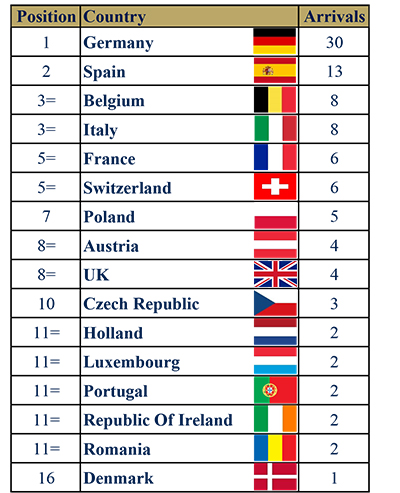
The main headline in the media this week has been in relation to the proposed Super League within European football, and the backlash has been huge. However, it inspired us to share something with you, as we regularly devise a Tenerife Property Shop league table of our own. Our Super League is far less controversial, but does have a familiar football feel to it, with Germany leading the field, and the English full of early promise and expectation, but coming up short once again.
*info from flight radar and correct for week up to 24/04/2021
We, as a company, monitor the arrivals board at Tenerife South airport on a regular basis, as it is a great but very simple insight as to who is arriving, and from where. As result, we are constantly switching our advertising campaigns and re-allocating our marketing budget to different market-places, thus ensuring we are keeping up with any major swings that take place, in terms of who is hot right now, and most likely to make that jump to become a property owner in the sun. Luckily, we are a multi-lingual team, and are therefore not signing up for new language classes every week.
The European vaccine rollout finally seems to be gaining momentum and Tenerife is no different, with two new vaccination points having been opened this week, which will surely speed up the number of jabs administered within the local community. Of course, health is paramount for everyone, but as a vaccinated island we will all feel safer and hopefully the Canarian Government will be more open to allowing visitors, from all nations, into the island to enjoy Tenerife again.
The local Town Halls in the South all seem to be in a proactive mood, with various improvements taking place in the municipalities, and considerable investment being made, as they ready themselves for the return of tourism. The Town Halls are also beginning to start their summer marketing campaigns to promote their own municipalities within the international tourism sector, and some of the smaller towns have also seized the initiative as they look to drive visitors to their area.
There is a misconception amongst a few prospective purchasers we have spoken to, that the property market in Tenerife is in dire straits, and this is not true. Whilst there may be opportunities for savvy investors and the possibility of acquiring a property for a lesser price than January 2020, pre-Covid19, the consensus amongst our vendors is that they will wait to see how the property market performs in the second semester of 2021 before making any huge reductions in their price or listening to any "crazy offers".
The clients that are managing to find their way to Tenerife to view properties are serious and full of intent, and the conversion rate from being a prospective purchaser to signing a purchase contract, and paying a 10% deposit, is very high and the property market is still moving.
History has taught us that after pandemics, crises and recessions, there normally follows an economic boom, as thousands of people look to realign their lives, expedite major life decisions and generally seek change. It is fair to say that many people have suffered financial difficulties during the Covid-19 pandemic, however, there also appears to be a growing number of people all over Europe who have accumulated some extra wealth over the last year and a half, largely due to them receiving an income similar to times of normality but finding, rather frustratingly, that they have had no real opportunity to spend their hard-earned cash due to multiple lockdowns and various restrictions.
The feeling is, once the good people of Europe are finally unshackled from their chains of Covid19, the want and need to spend money and maybe even invest in a property that will enable them to live or own a holiday home in the sunshine, will be too difficult to resist, and who could argue with anyone who wishes to swap their coats and wellington boots for swimwear and flip flops. You only live once!
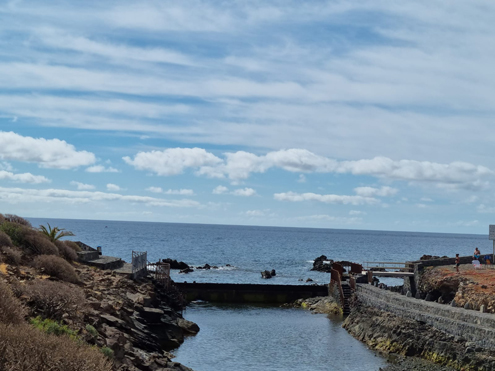
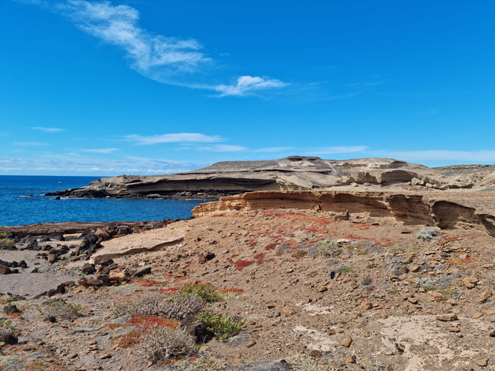
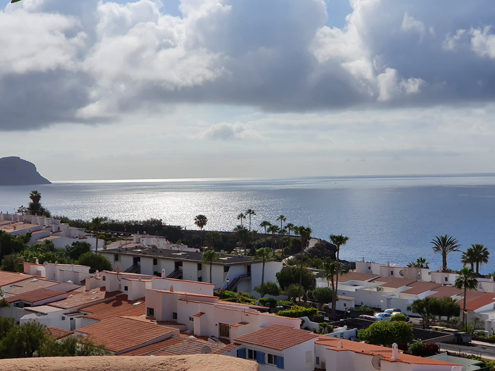
For those of you who have been following our newsletter regularly, you will notice that we always include some photographs of various parts of the island, and the feedback we receive for this is always positive. All of the team chip in with the photographs but one particular member of the team is our chief explorer, and spends many a weekend lost in the mountains. Next month, we will reveal who it is … but for now please enjoy the wonders of our stunning island, and maybe next time you are here in Tenerife, you too can visit these beauty spots. However, try to keep it to yourself, as our intrepid photographer likes his/her peace and quiet.
Join us next month to find out which one of us it is, and see where he/she visits next.
We know many of you currently feel cut off from Tenerife, and any contact with your favourite Island is welcomed, so if there is anything that you would like to know or see, drop us an email and, if possible, we will try and include the content in our next newsletter.
That is all for this month. We hope you have enjoyed hearing from us, and we look forward to hearing from you, and hopefully seeing you again soon, very soon.
Take care, stay safe.
Please feel free to contact us for more information, or with general enquiries about Buying or Selling Property in Tenerife
Well, we gave you a couple of months off to recover from the hustle and bustle of the Christmas period, but now we are back with a positive start to 2021.
Whilst the UK is still uncertain as to when travel will return, the Spanish Minister for Tourism is adamant that Tenerife will have a Summer Tourist Season, so we will welcome back the rest of the world, whilst we eagerly await the British tourists.
The worldwide vaccination project has started, many countries have different ideas and plans, but we seem to be on track to get some sort of normality back in our lives in the not too distant future … there is light at the end of the tunnel … and it’s not just the glorious Tenerife sunshine!
That’s not to say that we have not had our share of beautiful snow topped peaks over the winter, as is evident below:
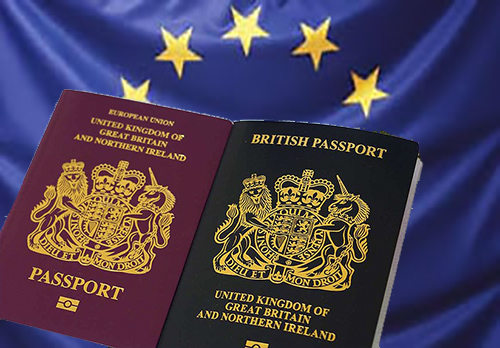
We cannot start this year without mentioning Brexit; 4 years in the coming, and now it has finally arrived. A deal was done, and it has had little or no impact on life for us Canarian Residents. British people are still welcome to relocate to our island, it is just a slightly different process. The most important thing to remember is not to believe the self-professed experts, or the rumour mills on social media.
If you are British and follow comments made in the UK press, you are probably not happy about the "EU’s new post-Brexit travel rules", which ban you from spending more than three months in your holiday home in Spain from January 2021.
Many second-home owners are worried, confused and saddened by the news regarding the 90-day rule giving them cause for concern. If you are not aware of this, then you can find further information in the Blog on our Website entitled "The Post-Brexit 90-day Rule." (CLICK HERE to view in full).
There is, however, the possibility of a Golden Ticket, well, actually a Golden Visa …
… which allows a free pass to stay in Spain without taking residency.
Spain launched its Golden Visa programme in 2013. It gives you residency rights in the country if you make an investment of at least €500,000 in one or more real estate transactions. You can renew the visa every two years. After five years, you can get permanent residency, and, after ten years, citizenship. At no point do you actually have to live in Spain.
The Golden Visa used to be of most interest to non-EU citizens. But since the Brexit referendum, many more UK citizens are now taking advantage of it, because they are now classed as Non-European citizens. For more in depth information, including many frequently asked questions, CLICK HERE to read our "The Golden Visa!" Blog.
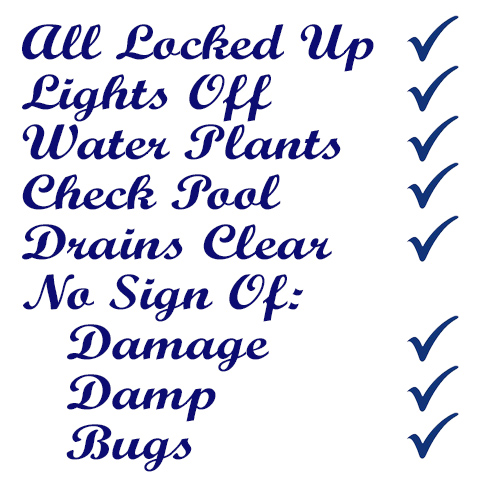
Many property owners have been unable to visit for considerably longer than anticipated, and you may feel your property has been neglected somewhat. If you should have any worries, we are able to do a property check for you, to ensure all is safe, undamaged and bug free. If you would like to enlist our services, you can contact us for further details.
If this last year has taught us one thing, it is how much we miss the simple things, and how important it is to spend time with families, take those holidays, go on the adventures you have put off in the past, and if one of those dreams is to relocate to the sun, then take the plunge! Tenerife Property Shop is here to help you achieve that goal, and our portfolio is being updated and amended on a daily basis.
Spain launched its Golden Visa programme in 2013. It gives you residency rights in the country if you make an investment of at least €500,000 in one or more real estate transactions. You can renew the visa every two years. After five years, you can get permanent residency, and, after ten years, citizenship. At no point do you actually have to live in Spain.
The Golden Visa used to be of most interest to non-EU citizens. But since the Brexit referendum, many more UK citizens are now taking advantage of it, because they are now classed as Non-European citizens.
What is the Golden Visa Scheme?
Introduced in September 2013, the law gives foreigners who invest large sums in Spanish property, public debt, and projects of general interest the right to reside in Spain.
For property investors, the minimum investment before taxes and charges is €500,000. It must be remembered that the additional costs of purchasing a property will add around 10% to the basic investment.
While the law does not give people the right to work in Spain, there is one beneficial added extra, insofar as it gives non-EU citizens access to the entire Schengen area. You can renew the visa every two years. After five years, you can get permanent residency, and, after ten years, citizenship.
Note. The 26 Schengen countries are: Austria, Belgium, Czech Republic, Denmark, Estonia, Finland, France, Germany, Greece, Hungary, Iceland, Italy, Latvia, Liechtenstein, Lithuania, Luxembourg, Malta, Netherlands, Norway, Poland, Portugal, Slovakia, Slovenia, Spain, Sweden, and Switzerland.
How to get a Spanish golden visa.
First, you must purchase a Spanish property for €500,000 or more. Key points to note are:
1) The €500,000 must be money you bring into the country. Thus, if you finance part of your purchase with a Spanish mortgage, you still have to pay the first €500,000 either in cash, or with a mortgage granted by a non-Spanish bank.
2) Refurbishment costs do not count towards your golden visa.
3) You can divide the €500,000 across multiple properties.
Obtaining a Spanish golden visa is a two-step process.
Step 1
First, you must go to the Spanish Consulate in your home country to obtain the visa. This is a stamp in your passport that allows you to travel to Spain, with multiple entries and exits, for one year. Within this year you must go to Spain and apply for your residency permit.
To get the visa, Tenerife Property Shop S.L. will have ensured that you have your purchase agreement(s) and your property’s title deed(s) for you to show, to prove that you have made the property investment.
You will also need to show standard immigration documents such as your passport, and proof you do not have a criminal record.
If your spouse is applying for residency with you, your marriage certificate must also be submitted. If your children are applying, their birth certificates must be submitted.
Under Spanish law, spouses and dependent children under the age of eighteen years are guaranteed residency permits. For all other family members, you must present paperwork proving they are your legal dependents.
Step 2
Next, you must travel to Spain and apply for your residence permit. This needs to be done in person so they can take your fingerprints.
Your initial residence permit is valid for two years. You do not have to reside in Spain during this time, but you do need to return to renew your residence permit in person.
After you have been a legal resident of Spain for five years, you are eligible to apply for permanent residency. Once you have ten years of Spanish residency, you are eligible to apply for Spanish citizenship.
Residency.
If you really want to spend very long periods in Spain, in excess of six months each year, then you will be looking at taking up Spanish residency. This is more than simply declaring that you live in Spain. To become resident, you will need to apply for a residency permit.
In doing this, you will also need to become a tax resident in Spain, which means filing annual tax returns with Spain’s Hacienda, even if all your income comes from the UK or elsewhere. These are some of the most cited reasons for people choosing not to take up Spanish residency, but they will now need to be weighed against the loss of European rights under Brexit.
You cannot be resident of two countries at once, so if you become a Spanish resident you have to give up your British residency which has an impact on things like tax and access to the NHS.
Under what circumstances would your residents permit not be renewed?
Be aware that if you sell your property or transfer it into someone else’s name, the immigration authorities will not renew your residence permit.
If you have a criminal record your residence permit will not be renewed.
Finally, if you are not up to date on your Spanish tax payments, you will need to get up to date before your permit is renewed.
Hoping to slip under the radar?
Many British people have got used to coming and going with minimal paperwork or checks, and without having to keep track of how many days were spent where, but taking into account the 90-day Rule now in force, this would now be a problem. (For more information regarding the 90-day Rule – Click here)
For non-EU nationals like Americans and Australians, Spain has earned itself a reputation as being not too fussy about the exact exit date of people who are not working or claiming benefits in Spain as long as it’s fairly close. It is also true that there is likely to be a ‘bedding in period’ for the new rules.
However, passport checks are expected to become stricter from the 1st January 2021, not least because British nationals will no longer be able to use the EU/EEA/CH passport queue.
Beware… If you are caught over-staying your allocated 90 days you can end up with an ‘over-stay’ flag on your passport which can make it difficult to enter any other country, not just Spain, and is likely to make any future attempts at getting visas or residency a lot more difficult. It could even result in you being barred from entering Spain in the future.
UK Government guidance also states that you might also have to show a return ticket and prove you have enough money for your stay when travelling between the EU and UK.
The Spanish Golden Visa program is the most desirable in Europe.
A number of other countries offer Golden Visas. Prior to the 2008 downturn, they were mainly in the Caribbean. After the economic slide, European countries with good weather (and weak national balance sheets) began offering Golden Visas. They are attractive because most of them include the right to work and travel within the Schengen area.
There are a few ways to get Golden Visas: through a property purchase (the focus of this article), through investment in a country’s government bonds, through investment in a country’s artistic heritage, parking a large amount of money in a bank account in a country, and/or just general investment in the country.
For all but the super-rich, investing in property is the best way to get a Golden Visa. The following European countries offer Golden Visa property purchase schemes: Spain, Portugal, Greece, Cyprus, Malta, and Monaco.
However, Spain’s Golden Visa program is the best, because it has the strongest property market and the best sovereign credit rating of all the above countries. There are no residency requirements, and it is not on the OECD blacklist. Malta, Cyprus and Monaco have the intense disadvantage of being on this list.
Frequently asked questions about Spain’s golden visa program.
Click the question to view the relevant answer.
If I obtain a Golden Visa, will the time spent in Spain count towards the 90-day rule for staying in the Schengen area?
If you hold a Golden Visa, you may come and go as you please from Spain; you are not subject to the 90 days in 180 days rule that applies to all other UK nationals. The time you spend in Spain would not count towards the 90 in every rolling six-month period, so within the same six-month period you need not worry about the rule regarding spending 90 days in Spain and 90 days in the Schengen Area. Without a Golden Visa, you could not achieve this.
Can I travel visa-free in Europe with a valid Spanish Golden Visa?
You can travel without a visa for 90 days out of every 180 days within the Schengen area, but you will still need a visa to enter EU countries outside the Schengen area.
Is there a certain period in which a purchase must take place?
If you have purchased a property in Spain, you must prove you have acquired ownership of the property through a certificate issued by the Land Registry, within the three months prior to the application.
How long does Spain’s Golden Visa last?
Please note that there are two steps to this process. First you obtain the visa, which is a stamp in your passport issued by a Spanish Consulate. It allows you to travel to Spain, with multiple entries and exits, for one year. Within this year you should travel to Spain and apply for your residency permit. You must apply for this in Spain.
How long are the residency permits valid?
Residency permits are initially valid for two years. After this period, you can renew it. This renewal is valid for five years. You can continue renewing it every five years as long as you own properties in Spain. You do not have to reside in Spain in order to be allowed to renew your residency permit.
How do I start the process?
In order to start the Golden Visa/Residency Permit process you must first purchase properties in excess of €500,000. You will need the purchase agreement(s) and the deed(s) to prove that you have made the investment(s).
Can I apply for Spain’s Golden Visa with more than one property if each property is less than 500,000€?
Yes. You can use more than one property to qualify for Spain’s Golden Visa as long as the amount invested is equal to or greater than €500,000.
It is possible to purchase two properties instead of one?
Yes, Golden Visa holders have an option that will allow them to buy two apartments as long as the combined purchase prices are not less than €500,000. You could have one as your main base to live in when in Tenerife, and the other to rent to bring in some income on your investment. If you have a Golden Visa and therefore Spanish residency, you will then be able to get a Spanish mortgage to purchase further property. So, after you get your visa, you could take out a mortgage to purchase another property, and as a Spanish resident, you can get a higher percentage of the property value and be able to rent the property to receive a higher rental yield than the interest rate being charged for the mortgage.
I bought my property back in 2015 and paid more than €500,000 plus closing costs for it at that time. Can I use this to qualify for a Golden Visa?
Yes you can. As long as your investment was not made before the 28th September 2013, then you can use it for obtaining a Golden Visa.
I bought a property in Tenerife, Spain, after the 28th September 2013 and before Brexit on the 1st January 2021, but I only paid €350,000 for it. Will this qualify me for a Golden Visa?
No, because the minimum amount of investment in property that is required to qualify for this visa is €500,000. However, you can still qualify by buying another property for €150,000 or more to make a total of €500,000 or more. It does not matter if you bought your existing property six years ago, you could still use that towards the minimum amount required to obtain the special residency visa permit now. It could be that you purchased two or more properties between September 2013 and January 2021 for an amount of say €400,000. In this case, you can still use all those properties towards the minimum total investment required, and simply top up your portfolio with a further property of €100,000 or more to qualify.
I bought a property in 2015 for €450,000 which was a very good price because it was a stress sale. The property is now worth around €600,000 so will that qualify me for a Golden Visa?
No. Capital appreciation of a property is not considered for this purpose and only the actual purchase price is taken into account. To qualify, you would need to invest in another property costing €50,000 or more.
I bought a property a few years ago for €450,000 and have spent well in excess of €50,000 in making improvements to the property, meaning that I have invested more than €500,000 overall, so will that qualify me for the Golden Visa?
Unfortunately, the answer is no. It is the actual purchase prices shown in title deeds that are taken into account and must be €500,000 or more. Improvements or extensions to a property are not taken into account.
My wife and I bought a property for €550,000 and had it put in our joint names in the title deeds. Does this qualify us for a Golden Visa?
Regretfully, No, you do not. It is normal for couples to purchase a property in their joint names, but the law requires that the €500,000 is only in the name of one investor, so to qualify, one of the two people shown in the title deeds would only have €275,000 that counts towards the required €500,000. So, it would be necessary to purchase an additional property for €225,000 to qualify for the visa.
My wife and I are at the moment looking to buy a property for €750,000 in our joint names. Will this qualify us for a Golden Visa?
If the property is registered as owning 50% each, then this would individually be below the minimum threshold of €500,000. However, if the ownership of the property was shown in the title deeds to be €500,000 for one person and €250,000 for the other, then you would qualify.
How long does the process take?
Once you apply for your residence permit, it can take up to 50 days. Roughly, 25 days to complete the application process and 25 days to receive your ID card.
Can I get a mortgage to purchase my property?
Yes, but it must be from a foreign bank. The logic is that will bring €500,000 or more of foreign investment into Spain. If you borrow money from a Spanish bank, you are not bringing money into the country. So, you should purchase with existing funds or have your financing lined up before you purchase. Ideally, this will be with a non-Spanish bank that you have done business with for years.
Does the Golden Visa only apply to me or can I extend it to family members?
Spain’s Golden Visa extends to immediate family members. Spouses and dependent children under the age of eighteen years, are guaranteed residency permits. For any other family members, you must present paperwork proving they are your legal dependents.
Does the Golden Visa only apply to me or can I extend it to family members?
No, it does not. Existing permits and procedures are still valid. This law is specifically tailored to attract affluent non-EU investors and helps cut red tape.
Do I need health insurance cover for Spain even if I’m never there?
Yes, it does not matter how little time you plan to spend in Spain, you must have health insurance cover valid in Spain.
Can the law regarding the right to have a Golden Visa be changed retroactively?
One of the cornerstones of the Spanish legal system is that laws do not have retroactive effects. This achieves legal stability with respect to acquired rights. Therefore, retroactive change is only applied in very exceptional cases.
If I have a Spanish Golden Visa Residence Permit, what are my tax obligations?
If you spend less than 183 days a year in Spain, you can avoid fiscal Residence, meaning you do not have to pay income tax in Spain, or declare your worldwide assets. The option to avoid fiscal Residence is one of the big attractions of this new law. However, you still have to pay certain taxes related to owning property in Spain, such as rental income tax and municipal taxes. A very important benefit is that the Spanish Golden Visa Scheme is retroactive for British purchasers to take advantage of. As stated previously, the scheme started for non-EU nations on the 28th September 2013, so any British owners who purchased their properties since then, may qualify for a Golden Visa. Here are some further Q & A’s relating to this.
Can I work in Spain with this Golden Visa type of residency permit?
Yes, you can reside and work in Spain during the validity of the permit.
Can my children go to a state school in Spain if I have a Spanish Golden Visa?
Yes, in fact in Spain the scholarship of children under 16 is mandatory.
Are there any scenarios under which the immigration authorities will deny renewing my residence permit?
There are two scenarios under Spain’s Golden Visa program where you would be denied renewal. First, if you sell your property or transfer it into someone else’s name. However, you can sell the property and renew your Residence Permit if you re-invest €500,000 in another Spanish property. Second, if you have a criminal record. If you have a criminal record you will not receive an initial residency permit.
If I buy property through a company, can I still get a Golden Visa?
Yes, you can, so long as the company is not based in a tax haven All you have to do is prove that you, directly or indirectly, hold the majority of the voting rights and have the power to appoint or dismiss the majority of the board of directors. This needs to be demonstrated through official documents such as your company’s articles of incorporation. These documents should be notarised and translated into Spanish.
This article is for information purposes only and is not a substitute for proper qualified legal advice regarding this subject.
This article has been written from official notifications and information given by lawyers and various other sources that we obtained information from, but our own lawyers advise us that there is some confusion and changeable interpretation of the rules by the relevant authorities in Spain, and it is sometimes not as straightforward as it seems.
The procedures are complicated and expensive and each case is different. For example, according to the experience of specialist lawyers in Mainland Spain, one of their clients was told by the relevant authorities that it was necessary to invest €500,000 per person for a married couple (in total €1,000,000) as opposed to one of them investing €500,000 with the ability to extend that visa to include the spouse.
Therefore, it is very important to understand that this article is written to give a general indication of the Spanish Golden Visa Scheme and must not be taken as legal advice or statement of definite facts, as the relevant authorities have the last word according to their current criteria which is changeable now and at any time in the future also due to the exceptional Covid-19 situation.
Anybody wishing to take advantage of the Golden Visa Scheme should obtain proper legal advice from a Lawyer who specialises in this subject. We can give reference to a lawyer for people to contact if so required.
Second homeowners in Spain will be limited to 90 days!
If you are British and follow comments made in the UK press, you are probably not happy about the "EU’s new post-Brexit travel rules", which ban you from spending more than three months in your holiday home in Spain from January 2021.
Many second-home owners are worried, confused and saddened by the news regarding the 90-day rule giving them cause for concern. If you are not aware of this, then the following information will be of interest and useful for you to know.
The changes to your rights are not down to "new post-Brexit travel rules" as although this is a result of Brexit it is not new. The same rules have always applied to non-EU citizens, moving around as third country nationals.
You were fortunate to enjoy special rights that waived this rule because the UK was a member of the EU. Brexit has taken those benefits away from British people because the UK is no longer a member of the EU club, so therefore cannot expect exclusive membership rewards. Britain chose to put itself in that different category.
The 90-day stay rule means anyone visiting any EU country cannot return for a further three months. It is actually worse than that, as the rule doesn’t apply to just Spain, but the entire EU bloc.
So, once a 90-day allowance in a 180-day period has been spent, you cannot return to your holiday home in Spain, or travel anywhere else in the EU.
When you enter the Schengen area more than once in the 90 days, official guidance from the EU says, "you must carefully calculate your days of stay, as the overall period of stay must not exceed the overall total of 90 days within any 180-days period".
For those of you who like to spend all winter in the Tenerife sun, you will find yourselves having to return to cold Britain sooner than you would wish.
The ramifications of overstaying in Europe could be serious. Post-Brexit, British passports will be scanned on arrival and departure. Anyone caught "illegally present", staying longer than permitted, risks an "over-stay flag" on their passport. This could lead to a fine, difficulties applying for any future visa, or even a re-entry ban.
As more details emerge regarding your lost rights, blame has frequently been levelled at the "vindictive" EU, but really, it is standard third country national rules being applied. Anger exists at the dawning realisation of what benefits are being lost to British owners of a second home in Spain. For some people, perhaps including some reading this article now, late awareness of the 90-day rule is a real shock.
Note. The 26 Schengen countries are: Austria, Belgium, Czech Republic, Denmark, Estonia, Finland, France, Germany, Greece, Hungary, Iceland, Italy, Latvia, Liechtenstein, Lithuania, Luxembourg, Malta, Netherlands, Norway, Poland, Portugal, Slovakia, Slovenia, Spain, Sweden, and Switzerland.
We will attempt to cover questions that may be asked by British people who have previously enjoyed longer term stays in their Tenerife property and the following Q & A’s will clarify some of the things you need to know.
Frequently asked questions The Post-Brexit 90-day Rule.
Click the question to view the relevant answer.
What do I need to know about the 90 in 180-day rule?
Up until now, UK citizens have been able to come to Spain for whatever length of time they wanted, and many people would come for maybe four or five months over the winter. But now, British people who are not resident in Spain or other parts of the EU will only be able to spend 90 days in every 180-day period in the EU. It is really important that you understand that it is not from the moment that you reach your final destination but rather when you first enter the Schengen area. You may be destined for the south of Spain by driving though France from the UK, and the clock starts not when you reach your destination but when you initially leave the UK.
Does the 90-day rule apply to British second-home owners in Spain?
Yes. If you are not a resident in Spain, you are bound by the 90-day rule as well. It is perfectly possible that at some point in the future Spain may choose to have a different sort of regime for second-home owners or people who spend long periods of time in Spain, particularly as the UK is not putting the same restrictions on Spanish people visiting the UK. However, the Spanish government has many matters of greater priority to deal with at the moment, so if they are eventually willing to consider relaxing the 90-day rule, it could be quite a way off in the future.
Will I be able to put my 90-day periods together?
Unfortunately, the answer seems to be no. If you are a non-resident Briton in Spain you will not be able to spend two 90-day periods together to form 180 days in a 365-day year. At the end of the 90 days, you must be out of the Schengen area and until you reach day 180 you will not be allowed to re-enter again. You can split the 90-day period into two 45-day periods within a total of 180 days, starting from the moment you first enter the Schengen area.
How will border control know how long I’ve been in Spain?
From January 1st, 2021, British people entering the EU will have their passports stamped, so it will be clear how many days you have spent in the Schengen area. Your UK passport may also be scanned and there will be a record of the date you entered Spain on your flight or ferry booking.
When does the 90-day rule start?
The 90 in 180-day rule started on the 1st January 2021 for British non-residents.
What do I need to know about my passport and travel to Spain post-Brexit?
Passports will need to be valid for at least six months on the day that you enter Spain/Schengen area. So, in order to travel, there cannot be fewer than six months left on your UK passport before it expires and needs to be renewed, or you won't be allowed to travel. If in the past you renewed your UK passport early, and your passport is valid for ten years plus the number of months that you renewed in advance, keep in mind that those extra months do not count when considering passport validity.
Which airport queue will British travellers have to stand in from the 1st January 2021?
All UK nationals, including those who are residents in Spain, will technically have to queue in the third country nationals’ queue at airports but exactly how that will be implemented at each airport is down to each Member State.
Will EHIC cards cease to be valid for British non-residents after Brexit?
This is not something that British people in Spain have previously had to worry about, as the European Health Insurance Card (EHIC) entitled them to emergency treatment in Spain should they fall ill or get injured while they are here. However, as a European scheme this is no longer available to British people after Brexit and therefore holidaymakers and non-residents arriving in Spain after the 31st December 2020 will no longer be able to use their EHICs and will have to take out travel/health insurance.
Does having a NIE number make a difference to how long I can stay in Spain?
No, a NIE is often wrongly used to refer to the green residency document issued to Britons before the 6th July 2020, but it is just a foreign identity number which non-residents will need to open a bank account in Spain, own a home etc. It is not a residency document and therefore will not mean you can sidestep the 90-day rule.
If you are struggling to work out your travel plans, below is a link to a tool which can help you to calculate your allowance.
So here we are, December and we would like to welcome you to the last edition of the Tenerife Property Shop newsletter in 2020.
The season of goodwill is upon us and this signals that we are almost at the end of the most turbulent, challenging, indifferent, emotionally draining year in modern history.
It is safe to say that 2020 is a year none of us will ever forget…. we have stayed at home, exercised in our lounge, home schooled, relentlessly sanitised our hands, video called our loved ones near and far, donned face masks, made plans and then cancelled them again, we have laughed, we have cried and some of us have even stock piled toilet paper for reasons still unknown to this day, but the one thing we can all agree upon, is that we live in hope that 2021 will be a better year, with some normality thrown in for good measure.
Despite all the uncertainty, we are still receiving a high level of enquiries and the appointment diary is busy. The different nationalities that we are currently encountering on our viewings, are as wide and varied as we have seen for some time. It is refreshing and encouraging for us to hear, when speaking with our clients from all over Europe, that Tenerife is still very much on the agenda for them, and the recent events have not dampened their thirst to purchase a property here, and in some cases it has prompted people to make the dream a reality sooner, rather than later.
We also added some great properties to our portfolio this month, look at a few of the new entries below.
We have some big plans for next year and the quieter Summer months, gave us some time as a team to brainstorm and think out of the box and we have floated and toyed with lots of ideas and we will look to implement some of these ideas in the not-too-distant future.
When times are as challenging as they are right now, it is always nice to receive a little lift and we were lucky enough to receive some fantastic news last month, that we would love to share with you.
Tenerife Property Shop S.L. has been honoured with two more International Property Awards in the categories of ‘Best Canary Islands Estate Agent’ and ‘Best Estate Agency Website Spain’ – 2020.
We are once again very pleased to be recognised for the standard of service that we give to our clients and for the exceptional quality of our website, which gives an extraordinary amount of information for visitors to the site and the best portfolio of properties for sale in the south of Tenerife.
The European Property Awards are the largest, most prestigious, and widely recognised awards, which are judged by an independent panel of over 80 industry experts, chaired by Lord Caithness, Lord Best and Lord Waverley, members of the House of Lords in the UK Parliament. The importance of these awards cannot be underestimated, as they are a testament to how everybody working in the company have strived to be the best they can, to put our company at the forefront of all that is good within our industry.
As in most parts of the world, the Christmas and New Year celebrations will be far tamer in Tenerife this year, with various restrictions in place and limitations on capacity for the normally busy bars and restaurants. The parades and outdoor gatherings have either been cancelled, or will be beamed virtually into our homes, which is a real shame for some of the parents among our team, as we know how much they were looking forward to standing on the side of the street for 5 hours, whilst being peppered with hard boiled sweets, courtesy of The Fire Brigade, various Disney characters, and the Three Kings: Melchor, Gaspar and Baltasar.
Witnessing Tenerife virtually empty at times has been truly heart-breaking. The mental and financial impact have hit hard, and the local economy has naturally suffered as a direct result. We long for the days when sunburnt Brits in sandals and white socks once again stroll the promenades, the Germans make an early morning dash for the sunbeds, the Irish fly 4,400km to sit in an Irish bar and drink Guinness, the Italians look to seek out the best coffee (but it is never going to be as good as Mama’s), and the French complain about the poor-quality baguettes on offer here in the Canary Islands ….
We would, and we will, welcome all our visitors back in an instant, and truly cannot wait to see you all again!
Please feel free to contact us for more information, or with general enquiries about Buying or Selling Property in Tenerife